
Home›Fort Pierce Personal Injury Lawyer›Fort Pierce E-Bike Accident Lawyer
Last reviewed: November 2026
Fort Pierce E-Bike Accident Lawyers
Were you hit while riding an e-bike in Fort Pierce? E-bikes are everywhere on the Treasure Coast, from Indian River Drive to US 1 to the causeway out to the beaches, and when a car turns across a rider doing 20 mph, the rider takes the full impact. Florida law treats most e-bikes like bicycles, so drivers owe you the same care they owe any cyclist. You won't pay a fee unless we win your case.
Quick Answers After an E-Bike Crash
Free Case Review
Confidential · No obligation · Se habla español
Injured on an E-Bike in Fort Pierce? A New Kind of Case
Electric bikes have changed how a lot of people get around Fort Pierce, from the scenic ride on Indian River Drive to commuters on US 1 and riders crossing Seaway Drive to the beaches. E-bikes move faster than regular bicycles, so drivers often misjudge a rider's speed when they turn across the rider's path. The rider has no protection when that happens.
Florida law is on the rider's side. Under section 316.20655, Florida Statutes, e-bike riders have the rights and duties of bicyclists. You have a legal right to the road, drivers have to give you three feet when they pass, and you don't need a license, registration or insurance to ride. A driver who ignores those rights can be held responsible for your injuries.
E-bike cases can also involve product liability claims when a battery fire, brake failure or frame defect causes an injury, claims involving rental or delivery companies, and insurance questions. Your own auto policy's uninsured motorist coverage may protect you on an e-bike. We look at every possible claim, and you pay nothing unless we win.
Fort Pierce E-Bike Accident Lawyer Reviews
These reviews come straight from our Google Business Profile and update on their own as new reviews are posted.
Reviews are written and posted by clients on Google and describe their own experiences. Results vary, and past results do not guarantee future outcomes.
Why Fort Pierce Injury Victims Choose Shiner Law Group
Choosing a lawyer is a personal decision, and you should know who you're hiring. Here is what working with Shiner Law Group looks like.
- A local office. Our Fort Pierce office on US Highway 1 is a short drive from where most of these crashes happen.
- No fee unless we win. We work on a contingency fee. The consultation is free and there's nothing to pay up front.
- You can reach us any time. Calls are answered 24 hours a day, seven days a week.
- We come to you. If you can't get to the office, we can meet at your home or in the hospital, or talk by phone or video.
- We speak your language. Our team speaks Spanish, and attorneys on our team also speak French, Haitian Creole and Hungarian.
- More than $500 million recovered. That's the total recovered for injured clients across Florida since 2002. Every case is different, and past results do not guarantee future outcomes.
Where Fort Pierce E-Bike Crashes Happen
The most common e-bike crash is a driver turning left or pulling out of a driveway who misjudges a rider coming at 20 mph or more. With more e-bikes on Fort Pierce streets and more distracted drivers, we're seeing more of these cases. We rebuild the rider's speed and the driver's line of sight to answer the "they came out of nowhere" excuse.
- US 1: the Treasure Coast's main road, with driveway pull outs and left turns across riders
- Indian River Drive: the waterfront route, with narrow lanes shared with distracted drivers
- Seaway Drive and the causeway: beach traffic on the bridges and causeway
- Okeechobee Road (SR 70): fast traffic and wide crossings to the west
- Downtown and Second Street: busy traffic, parking and car doors opening
- Orange Avenue and Virginia Avenue: growing commuter routes without protected bike lanes
E-Bike Injuries We Represent
- Traumatic brain injuries and concussions
- Facial fractures and dental injuries
- Broken collarbones, wrists and arms
- Spinal injuries and herniated discs
- Leg and ankle fractures
- Road rash and deep skin injuries
- Internal injuries
- Burns from battery fires
- Wrongful death
Other cases we handle in Fort Pierce
All Fort Pierce injury cases Car accidents Truck accidents Motorcycle accidents Train accidents Boating accidents Slip and fall Premises liability Brain injuries Burn injuries Wrongful death
Florida E-Bike Law: Your Rights on the Road
Open any section below for the details.
What to Do After an E-Bike Crash in Fort Pierce
If you're reading this soon after a crash, here's what helps most. You don't need to do everything perfectly. Do what you can and let us handle the rest.
- Get medical help first. Call 911 if anyone is hurt. If you feel fine, get checked anyway. Concussions and back injuries often show up hours or days later.
- Make sure there's a police report. Crashes inside the city are usually handled by the Fort Pierce Police Department. The St. Lucie County Sheriff's Office covers unincorporated areas, and the Florida Highway Patrol often works crashes on I-95 and the Turnpike. Ask for the report number.
- Take photos if you can. Get the vehicles, the road, the traffic lights, your injuries and the other driver's plate and insurance card.
- Keep the e-bike as it is. Don't repair or throw it away, especially if the battery, brakes or frame may have failed. If a defect played a part, the bike is the evidence.
- Get names and numbers. Write down contact information for witnesses. Look for stores or homes with cameras that may have recorded what happened.
- See a doctor within 14 days. After a car crash, Florida PIP coverage only pays if you get initial treatment within 14 days (Fla. Stat. 627.736).
- Be careful with insurance calls. Report the crash to your own insurer, but don't give a recorded statement to the other driver's insurance company before you talk to a lawyer.
- Keep your paperwork. Save medical bills, receipts and pay stubs, and keep short notes about missed work and how you feel each day.
- Stay off social media about the crash. Insurers look at posts and photos and may use them to argue you aren't really hurt.
- Talk to a lawyer before you sign anything. Early settlement offers often come before anyone knows how serious the injury is.
Florida crash reports are confidential for the first 60 days, except to the people involved, their lawyers and their insurers (Fla. Stat. 316.066). You can request your copy online through the FLHSMV Florida Crash Portal.
Your Rights Under Florida E-Bike Law
Full road rights
E-bike riders have the rights and duties of bicyclists under Florida law (Fla. Stat. 316.20655), including the right to the lane and to bike lanes, and generally to paths where bicycles are allowed, subject to local rules. A driver who ignores those rights is negligent.
The three classes and the misclassification defense
Florida defines three e-bike classes (Fla. Stat. 316.003). Class 1 is pedal assist up to 20 mph, Class 2 is throttle assist up to 20 mph, and Class 3 is pedal assist up to 28 mph. No license, registration or insurance is required for any class. When an adjuster tries to call your e-bike a moped or motor vehicle to deny coverage, these definitions answer that argument.
Insurance and product claims
Your auto policy's uninsured motorist (UM) coverage may protect you when a car hits you on an e-bike, and PIP may apply to you as someone struck by a car while not in a vehicle. We check these coverage questions in every case. When a battery, brake or frame defect contributes, a product liability claim against the manufacturer adds another path to recovery.
What Compensation Can You Recover?
Compensation in a Florida injury case is meant to cover what the injury has cost you so far and what it will cost you later. It usually falls into three groups.
Economic damages
These are the losses with a paper trail: hospital and doctor bills, therapy, medication, future medical care, lost wages and lost earning ability if you can't go back to the same work. Property damage is part of the claim too.
Noneconomic damages
These cover the personal side of an injury, including physical pain, emotional distress, scarring and the things you can no longer do. After a car crash, Florida only allows these damages against the other driver if the injury meets a legal threshold, such as a permanent injury or significant scarring (Fla. Stat. 627.737).
Punitive damages
Punitive damages are rare. They're meant to punish intentional misconduct or gross negligence, and the court has to allow the claim before it can be made. In most cases they're capped at three times the compensatory damages or $500,000, whichever is greater (Fla. Stat. 768.72 and 768.73).
Your own PIP coverage pays first after a car crash. It covers 80% of reasonable medical bills and 60% of lost income, up to $10,000 on most policies. Serious injuries usually cost far more than that, which is why the claim against the driver who caused the crash matters.
How Long Do You Have to File a Claim in Florida?
For most injuries that happened on or after March 24, 2023, Florida gives you two years to file a lawsuit. Before that date the limit was four years. Some claims have shorter deadlines or extra steps, so it's worth checking early.
| Type of claim | General deadline | Florida law |
|---|---|---|
| Most negligence claims (car crashes, falls) | 2 years from the injury | Fla. Stat. 95.11 |
| Wrongful death | 2 years from the date of death | Fla. Stat. 95.11 |
| Medical malpractice | 2 years from when the injury was or should have been discovered, and generally no more than 4 years from the incident | Fla. Stat. 95.11 |
| Claims against a city, county or state agency | Written notice to the agency within 3 years, before a lawsuit can be filed | Fla. Stat. 768.28 |
| PIP benefits after a car crash | Initial medical treatment within 14 days | Fla. Stat. 627.736 |
These are general rules, and exceptions apply, especially for minors and government claims. Talk to a lawyer about the deadline in your case. Shiner Law Group table, last reviewed November 2026. Free to share with a link to this page.
What If You Were Partly at Fault?
Florida uses a modified comparative fault rule (Fla. Stat. 768.81). If you were partly to blame, your compensation goes down by your share of the fault. If you were more than 50% at fault, you can't recover anything from the other party.
Here's an example. Say your damages are $100,000 and a jury decides you were 20% at fault for not signaling. You would receive $80,000. If the jury put you at 51%, you would receive nothing. That's why insurance adjusters often try to shift blame early, sometimes in the very first phone call.
The 50% bar doesn't apply to medical negligence claims, which still follow the older pure comparative fault rule.
Bike and E-Bike Crashes in St. Lucie County
St. Lucie County had 120 bicycle crashes in 2024, with 110 people injured and 1 killed, according to the FLHSMV annual crash report. FLHSMV counts e-bike riders with bicyclists, so e-bike crashes are included in these numbers.
Source: Florida Department of Highway Safety and Motor Vehicles (FLHSMV), Traffic Crash Facts Annual Report 2024, county crash and vulnerable road user tables. A crash can involve more than one type of road user. Chart by Shiner Law Group. Free to share with a link to this page.
Where e-bike crashes happen around Fort Pierce
We see e-bike crashes most often on US 1, on 25th Street, downtown around Orange Avenue and Second Street, and on A1A on the way to the beaches on Hutchinson Island.
Meet Our Attorneys
When you call, you work with our lawyers and staff directly. Here are the attorneys on our team. All are Members of The Florida Bar.
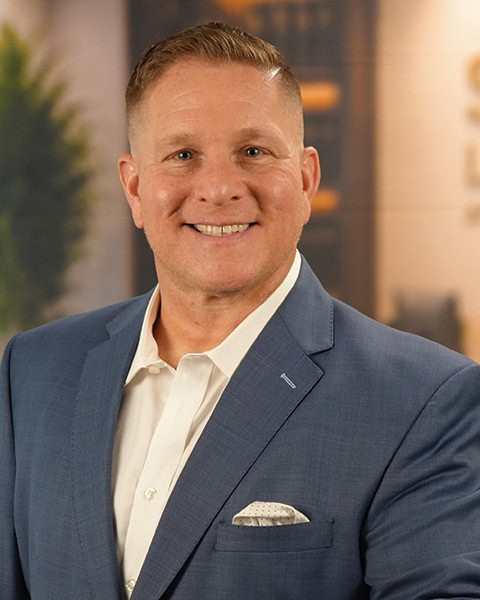 David I. Shiner, Esq.Founding AttorneyStarted the firm and has represented injured people in Florida since 2002. Licensed in Florida, Georgia and Washington.
 Stratton A. Smiley, Esq.Chief Legal OfficerClerked at Florida's Fourth District Court of Appeal before joining the firm.
 Joseph A. Mendelsohn, Esq.AttorneyHandles injury claims from the first call through settlement or trial.
 Sean Pleus, Esq.Attorney · Habla españolWorked as an insurance adjuster before becoming a lawyer, so he knows how insurers value claims.
 Melissa D. Dwyer, Esq.Attorney · Habla españolDefended insurance companies before joining our firm. Now she represents injured people.
 Vivien Smatko, Esq.AttorneyHandles injury claims and speaks Hungarian.
 Lynda S. Brennan, Esq.AttorneySpeaks French and Haitian Creole and has written on trucking insurance rules.
 Damian Ramos, Esq.AttorneyLicensed in Florida and New York. Retired commander of the NYPD Legal Bureau.
Serving Fort Pierce and the Treasure Coast From US Highway 1
We represent people throughout St. Lucie, Indian River and Okeechobee counties, including Fort Pierce, Lakewood Park, White City, Hutchinson Island, Vero Beach, Sebastian and Okeechobee. If you can't come to us, we'll come to you.
Shiner Law Group, Fort Pierce
531 S US Hwy 1, Bldg A, Ste D
Fort Pierce, FL 34950
Phone: (772) 979-6626
Hours: Open 24 hours, seven days a week
Other offices: Port St. Lucie, West Palm Beach, Wellington, Boca Raton, Fort Lauderdale and Orlando.
Fort Pierce E-Bike Accident Questions Answered
Do I need a license or insurance to ride an e-bike in Fort Pierce?
No. Under section 316.20655, Florida Statutes, you don't need a license, registration or insurance to ride an e-bike that fits Florida's definition, and you have the rights and duties of a bicyclist. If an adjuster says you were at fault because you had no license or insurance, that argument doesn't hold up.
A car turned in front of my e-bike. Who's at fault?
Usually the driver. A turning driver has to yield to oncoming traffic, including e-bikes riding legally on the road. Misjudging how fast an e-bike was going may explain the crash, but it doesn't excuse it.
Does my car insurance cover me when I'm hit on my e-bike in Fort Pierce?
It often does. Your auto policy's uninsured or underinsured motorist (UM) coverage may apply when a car hits you on an e-bike, and PIP may cover you as someone struck by a car while not in a vehicle. Bring us your policy and we'll check.
The insurance company says my e-bike counts as a motorcycle or moped. Is that true?
Almost never. Florida Statute 316.003 defines the three e-bike classes, and an e-bike that fits those definitions is treated like a bicycle, not a motor vehicle. We check your bike's specs against the law and answer that argument.
My e-bike's brakes failed or the battery caught fire. Is that a case?
It may be a product liability case against the manufacturer, the distributor or the store that sold it, along with any claim against a driver. Keep the bike exactly as it is. Don't repair it or throw it away, because the bike is the evidence.
Do e-bike cases work differently on the Treasure Coast than in South Florida?
The law is the same statewide. What differs is the evidence. There are fewer traffic cameras here than in the big metro areas, so finding witnesses, checking business cameras and documenting the scene quickly matter even more.
How long do I have to file an e-bike accident claim in Florida?
In most cases, two years from the date of the crash (Fla. Stat. 95.11). It's best to call early, before evidence disappears.
Hurt Riding an E-Bike in Fort Pierce? Talk to a Lawyer Today
The consultation is free, and you pay no fee unless we win. Call any time, day or night.