
Knocked Down or Chased by a Dog? You May Have a Case in Florida — Even Without a Bite
Key Takeaways
- Florida Statute § 767.01 makes dog owners liable for any damage their dog causes to a person — a bite is not required.
- The Florida Supreme Court has held that this statute virtually makes the owner “the insurer of the dog’s conduct.”
- Knockdowns, chase-and-fall injuries, and crashes caused by a dog running into the road can all support a claim.
- You generally do not have to prove the owner knew the dog was dangerous.
- Florida’s statute of limitations generally gives injury victims only two years to file suit — acting early protects your claim.
Does a Dog Have to Bite Me to Have a Case in Florida?
No — and this surprises almost everyone. Most people assume that “dog law” means “dog bite law.” But Florida actually has two separate statutes, and one of them covers injuries caused by a dog’s behavior even when the dog’s teeth never touch you.
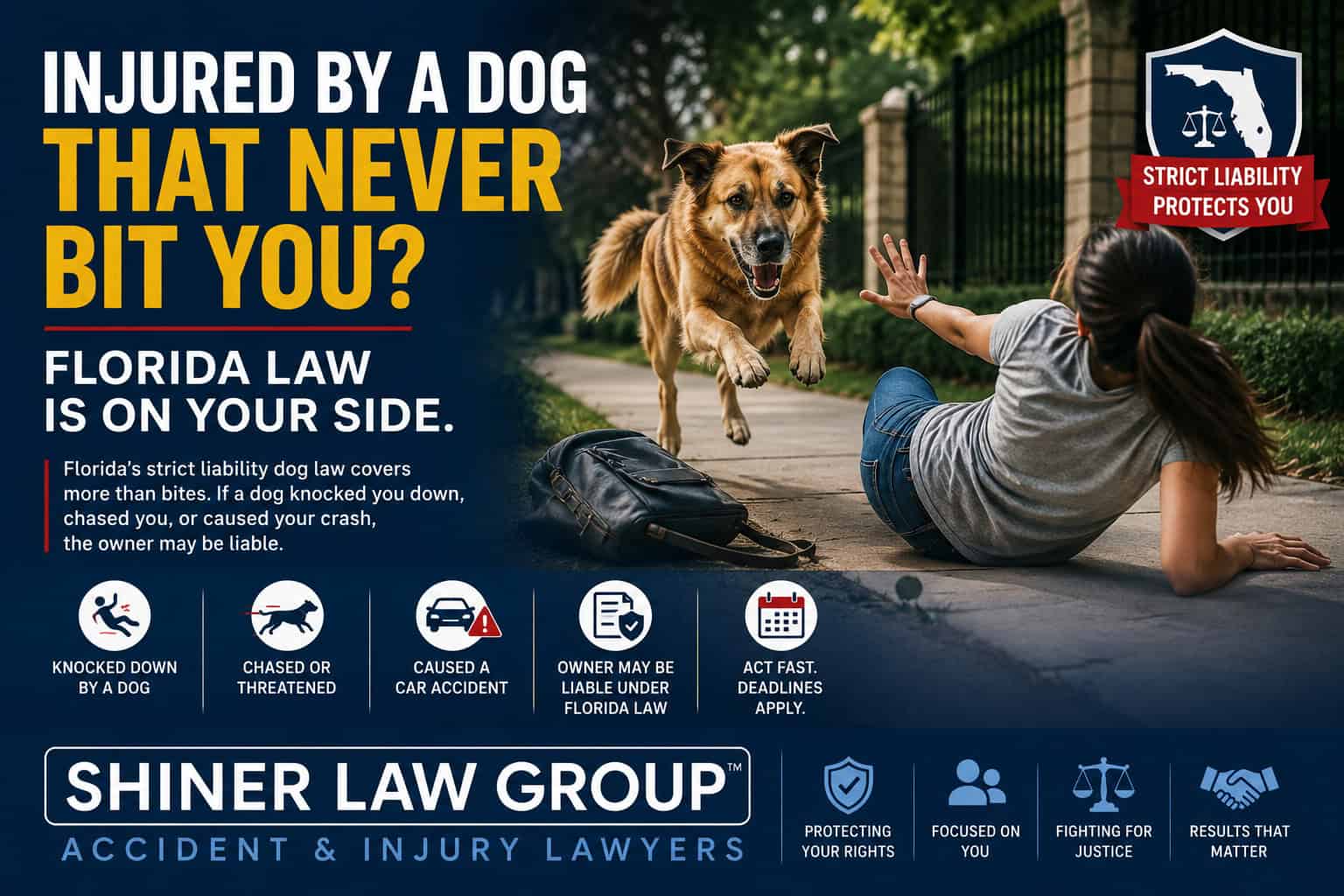
Under Florida Statute § 767.01, a dog owner is liable for any damage the dog does to a person. Not just bites — any damage. If a large dog jumps on you and knocks you to the pavement, if a dog chases you and you fall, or if a dog darts into the road and causes your car or bicycle crash, the owner can be held responsible for your injuries.
Florida’s Two Dog Injury Laws, Side by Side
| § 767.01 — Any Damage | § 767.04 — Dog Bites | |
|---|---|---|
| What it covers | Any damage a dog does to a person — knockdowns, chase injuries, crashes | Injuries from a dog bite |
| Do you need a bite? | No | Yes |
| Must the owner have known the dog was dangerous? | No — strict liability | No — liability applies “regardless of the former viciousness of the dog” |
| What can reduce recovery? | The injured person’s own share of fault, under Florida’s comparative fault principles | The bitten person’s own negligence reduces recovery by their percentage of fault |
Common Dog Injuries That Don’t Involve a Bite
- Knockdown injuries. A jumping or charging dog knocks a person off their feet. For older adults especially, these falls can mean hip fractures, wrist fractures, and head injuries.
- Chase-and-fall injuries. A dog chases a walker, runner, or child, who falls or runs into an obstacle trying to get away.
- Bicycle and scooter crashes. A dog runs at or alongside a cyclist, causing a loss of control.
- Car and motorcycle crashes. An unrestrained dog runs into the street and a driver crashes swerving to avoid it — or hits the dog and loses control.
- Leash and entanglement injuries. A dog wraps its leash around a person’s legs or pulls them down.
What Compensation Can I Recover?
A successful dog injury claim can recover the same categories of damages as other Florida injury cases: medical bills (past and future), lost wages and lost earning capacity, and pain and suffering. Because many dog owners are covered by homeowner’s or renter’s insurance, compensation often comes from an insurance policy rather than the owner’s pocket — which matters when the owner is a neighbor, friend, or family member.
What Should I Do After a Dog-Related Injury?
- Get medical care right away. Falls and knockdowns can cause fractures and head injuries that worsen without treatment — and prompt care documents the connection between the incident and your injuries.
- Identify the dog and its owner. Get the owner’s name, address, and phone number, and photograph the dog, the scene, and your injuries.
- Get witness information. Bystander accounts of the dog’s behavior are powerful evidence.
- Report the incident to local animal control — the report creates an official record.
- Talk to an attorney before giving any recorded statement to an insurance company. Florida’s statute of limitations generally allows only two years to file suit, and evidence fades quickly.
Injured by Someone Else's Dog?
Get a free, confidential case review from Shiner Law Group. No fee unless we win. Available 24/7.
Related Reading
Frequently Asked Questions
Can I sue if a dog knocked me down but didn't bite me?
Who is liable if a dog caused my car accident?
Do I have to prove the owner knew the dog was dangerous?
What if I was partly at fault?
How long do I have to file a dog injury claim in Florida?
This article is provided for informational purposes only and does not constitute legal advice, nor does it create an attorney-client relationship. Every case is unique, and past results do not guarantee future outcomes. The law discussed here may change, and its application depends on the specific facts of your situation. Attorneys at Shiner Law Group are Members of The Florida Bar. Shiner Law Group — Accident & Injury Lawyers. This is attorney advertising.