
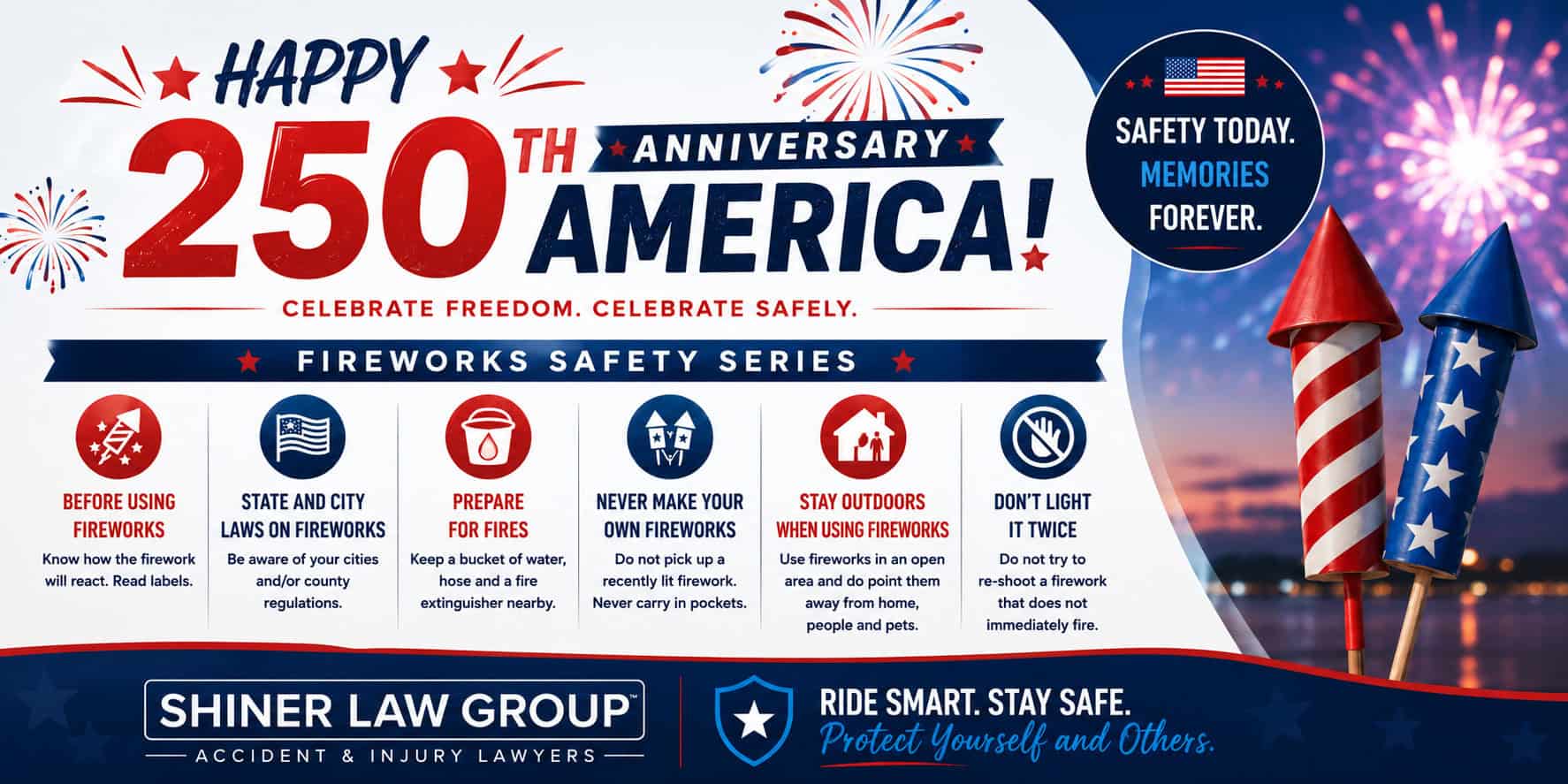
In Florida, consumer fireworks that fly or explode are legal for personal use on only three days a year - July 4, December 31, and January 1 - and even then your city or county can add stricter rules. Fireworks send thousands of people to the emergency room every Fourth of July. If you or a loved one is injured by a defective device or by someone else's careless use, you may have the right to recover compensation, and in Florida you generally have two years to file a claim.
- Legal only three days a year. Under Florida Statute 791.08, aerial and explosive consumer fireworks may be used only on July 4, December 31, and January 1. Outside those days, using them without a permit can be a first-degree misdemeanor.
- Injuries are climbing. The U.S. Consumer Product Safety Commission reported at least 15 deaths and an estimated 13,000 emergency room injuries nationwide in 2025.
- Sparklers are not "safe." They burn at about 2,000 degrees Fahrenheit and were tied to roughly 1,300 ER visits last year.
- Local rules and burn bans still apply. Cities, counties, and HOA covenants can restrict or ban fireworks even on a designated holiday.
- More than one party can be liable. A careless user, an event host, a property owner, or the manufacturer of a defective device may all share responsibility.
- The clock is short. Florida injury claims generally must be filed within two years.
The Fourth of July is the day we celebrate our country's independence, and in 2026 it carries extra weight: it marks the 250th anniversary of the signing of the Declaration of Independence. From barbecues and parades to ballgames and family reunions, the celebrations all build toward one tradition - fireworks. A little planning keeps that tradition fun. Here is what Florida law allows, the latest national injury data, and the safety steps that matter most this Independence Day.
Are Fireworks Legal in Florida?
Yes, but only on certain days. Under Florida Statute 791.08, created by Senate Bill 140 in 2020, consumer fireworks that fly or explode - firecrackers, Roman candles, skyrockets, and aerial shells - may be used for personal celebration on only three designated holidays each year:
- New Year's Day (January 1)
- Independence Day (July 4)
- New Year's Eve (December 31)
On those three dates, Floridians may set off consumer fireworks on their own property without a special permit. Outside of those days, using aerial or explosive fireworks without a permit can be charged as a first-degree misdemeanor, punishable by up to one year in jail and a fine of up to $1,000. Sparklers and certain approved novelty items remain legal year-round.
A few important limits still apply even on July 4:
Fireworks Injuries by the Numbers
Fireworks are festive, but they are also a leading cause of holiday injuries. Here is what the most recent national data shows:
Source: U.S. Consumer Product Safety Commission, 2025.
Most of the deaths involved misuse or a device that misfired or malfunctioned. The 15-to-24 age group accounted for the largest share of injuries, and the most frequently injured body parts were the hands and fingers (about 35 percent) and the head, face, and ears (about 22 percent). Even sparklers, often handed to children, were tied to roughly 1,300 emergency room injuries on their own.
Firework Safety Tips for 2026
The good news is that most fireworks injuries are preventable. If you plan to celebrate at home this Independence Day, keep these tips in mind:
- Buy only legal consumer fireworks from licensed, reputable retailers, and never use homemade, altered, or illegal devices.
- Read the label and follow all instructions and warnings before lighting anything.
- Keep a bucket of water or a connected garden hose nearby in case of fire.
- Never let young children handle or light fireworks, including sparklers. Older kids should only use them under close, sober adult supervision.
- Never use fireworks while impaired by alcohol or drugs.
- Light one firework at a time, then move away quickly, and never lean over a device while lighting the fuse.
- Use fireworks outdoors in a clear, open area, and never aim, throw, or point them at people, pets, homes, or vehicles.
- Never carry fireworks in your pocket, and never hold a lit firework unless the instructions specifically allow it.
- Wear eye protection when lighting fireworks.
- Do not relight a "dud." Wait at least 20 minutes, then soak it thoroughly in water before handling it.
- Soak all used fireworks in water before throwing them away, and never litter.
The Safest Way to Enjoy the Show
The single safest way to enjoy fireworks is to leave them to the professionals and watch a public display in your community. South Florida hosts dozens of free, professionally produced shows across Palm Beach, Broward, Martin, and St. Lucie counties every Fourth of July. Check your city or county website in the days before the holiday for this year's locations, start times, and parking. Watch the short safety reminder below before you celebrate:

Who Is Liable if a Firework Causes Injury?
Even when you do everything right, a defective device or a careless neighbor can turn a celebration into an emergency. Fireworks commonly cause severe burns, eye injuries, hearing damage, and in the worst cases the loss of fingers or hands. When the injury is someone else's fault, more than one party may be responsible:
A Careless User
Someone who lit fireworks recklessly, aimed them at people, or used them where they are banned.
An Event Host or Organizer
A party host or event operator who set off fireworks unsafely or failed to keep guests at a safe distance.
A Property Owner
In limited cases, a property owner who allowed dangerous conditions or unsafe use on their premises.
A Manufacturer or Retailer
If a defective, mislabeled, or illegally powerful device caused or worsened the injury, a product-liability claim may apply.
What to Do If You Are Injured by Fireworks
The steps you take in the first hours protect both your health and any claim you may have:
- Get medical care right away - even for injuries that seem minor. Burns and eye injuries can worsen quickly.
- Call for help and report it - dial 911 for serious injuries so there is an official record of what happened.
- Document everything - photos of the scene, the device, and the injuries, plus names and numbers of any witnesses.
- Keep the device and packaging - save the remnants, box, and labels, which can be critical evidence in a defective-product claim.
- Do not give a recorded statement to any insurer, and do not accept a quick settlement, before speaking with a lawyer.
- Talk to a Florida injury attorney early, while the evidence is fresh and well before the two-year deadline.
How Long Do You Have to File a Claim?
For most Florida personal injury claims, including fireworks injuries, you generally have two years from the date of the accident to file a lawsuit - a deadline shortened from four years in 2023. Florida also follows modified comparative negligence, which means your compensation is reduced by your share of fault, and if you are found more than 50 percent at fault you cannot recover at all. Miss the filing deadline and a court will almost certainly dismiss the case, so it pays to start early.
Frequently Asked Questions
Injured in a Fireworks Accident in Florida?
Shiner Law Group and Shiner the Shark want every moment you spend with friends and family this summer to be a safe one. If a defective device or someone else's carelessness left you hurt this Independence Day, we can sort out who is responsible and fight for the compensation you deserve. The consultation is free, and there is no fee unless we win.