
For many Florida families, Memorial Day weekend marks the unofficial start of summer. The boats come out of the garage, the coolers get packed, and the waterways fill with people looking to celebrate the long weekend with the people they love most.
As someone who loves boating myself — and as a father — I know exactly how special those moments feel. There is something irreplaceable about being out on the water with your family on a warm Florida afternoon.
But after more than two decades helping people who have been seriously injured in accidents, I have also seen far too many times how quickly a perfect day on the water can turn into a tragedy. A moment of distraction. A decision not to wear a life jacket. One too many drinks. These are the kinds of choices that change lives forever.
Before you head out this weekend, I want to share a few things I always think about before getting on the water — not as a lawyer, but as someone who cares about the safety of our community and our families.
Florida’s Waterways on Holiday Weekends
Most people don’t realize just how dangerous Florida waterways become during holiday weekends. Florida consistently ranks among the top states in the nation for recreational boating accidents — and Memorial Day, July 4th, and Labor Day weekends are the three peak-accident periods every year.
The Florida Fish and Wildlife Conservation Commission (FWC) reports that the combination of significantly higher boat traffic, increased alcohol consumption, and more inexperienced operators on the water during holiday weekends creates conditions that raise accident risk substantially. More boats sharing the same waterways, moving at higher speeds, with less distance between them — and in many cases, with operators who don’t get on the water very often.
The good news is that most boating accidents are entirely preventable. Here are the precautions I encourage every Florida boater to take before heading out — not just this weekend, but every time they get on the water.
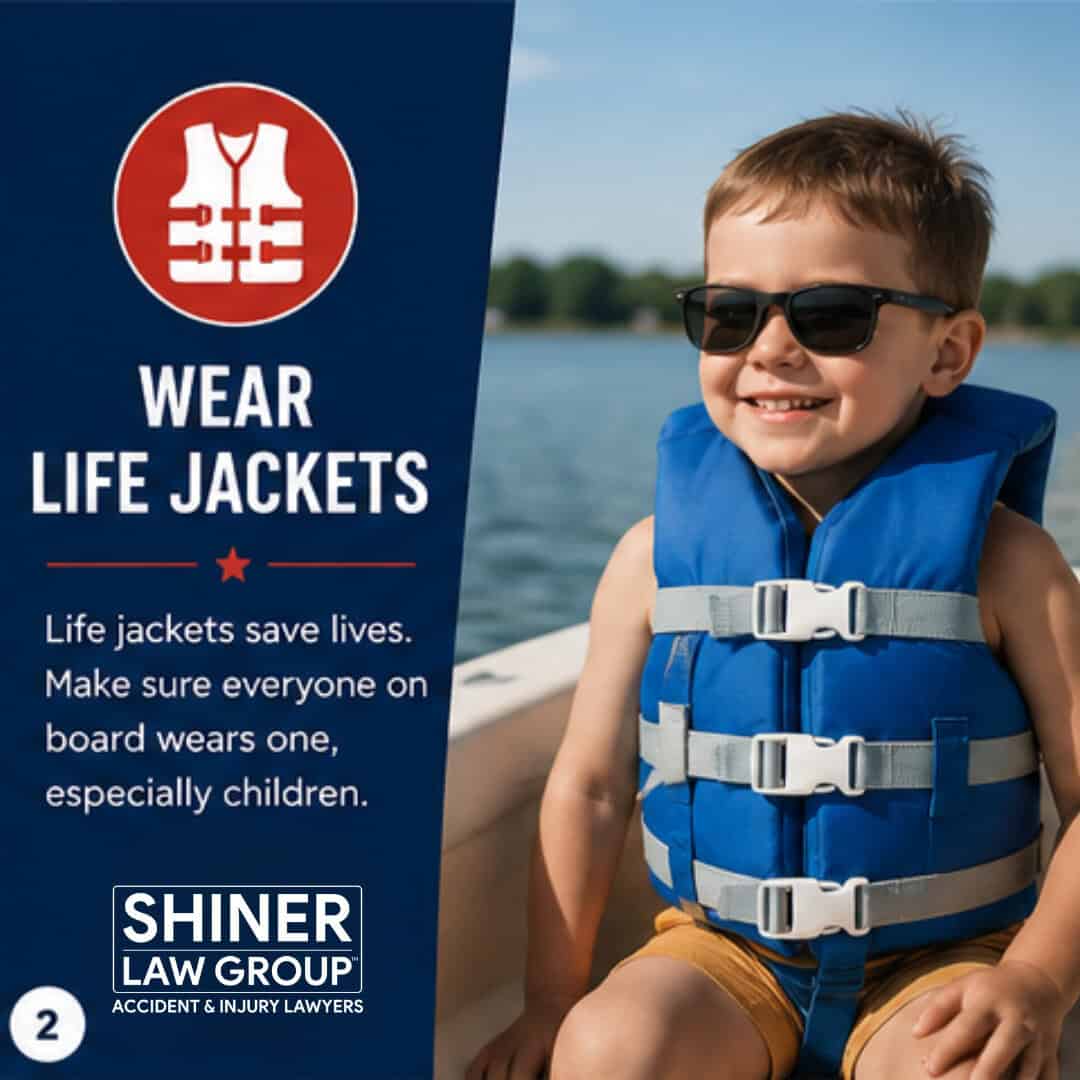
1. Wear Life Jackets — Especially Children
The single most important thing you can do on the water is wear a properly fitted, Coast Guard-approved life jacket. It sounds simple — because it is. And yet, the U.S. Coast Guard reports that the vast majority of drowning victims in recreational boating accidents were not wearing a life jacket at the time of the accident.
A common misconception is that life jackets are only necessary for people who can’t swim. The reality is that a sudden fall overboard — even in calm, shallow water — can disorient even the strongest swimmer. Cold water shock, boat propeller strikes, and head injuries from impact can all make swimming impossible even for experienced adults. A life jacket doesn’t require you to do anything once you’re in the water. It does the work for you.
Children are especially vulnerable. Florida law requires all children under the age of 6 to wear a Coast Guard-approved PFD at all times while on a vessel under 26 feet that is underway. But experts — including the American Academy of Pediatrics — recommend that all children wear life jackets whenever they are on or near the water, regardless of age, swimming ability, or vessel size.
2. Never Operate a Boat Under the Influence
Alcohol and boating is an even more dangerous combination than alcohol and driving — and many people don’t know that. On a boat, your balance, coordination, and judgment are already being affected by sun exposure, wind, wave motion, noise, and vibration. Add alcohol to that equation and the impairment multiplies quickly.
The U.S. Coast Guard consistently identifies alcohol as the leading contributing factor in fatal recreational boating accidents nationally. And yet, holiday weekends on Florida waterways are filled with boats being operated by people who have been drinking. The combination is predictable and entirely avoidable.
Under Florida Statute §327.35, operating a vessel with a blood alcohol content (BAC) of 0.08% or higher is a criminal offense — the same legal standard as DUI. A BUI conviction carries fines of up to $1,000 for a first offense, potential jail time, suspension of boating privileges, and a permanent criminal record. Law enforcement officers on Florida waterways conduct BUI checks on holiday weekends and can board your vessel to conduct sobriety testing.
If you want to have a few drinks on the water, designate a sober operator — just as you would designate a sober driver. It is not a sacrifice. It is the right decision for everyone on your boat and on the water around you.
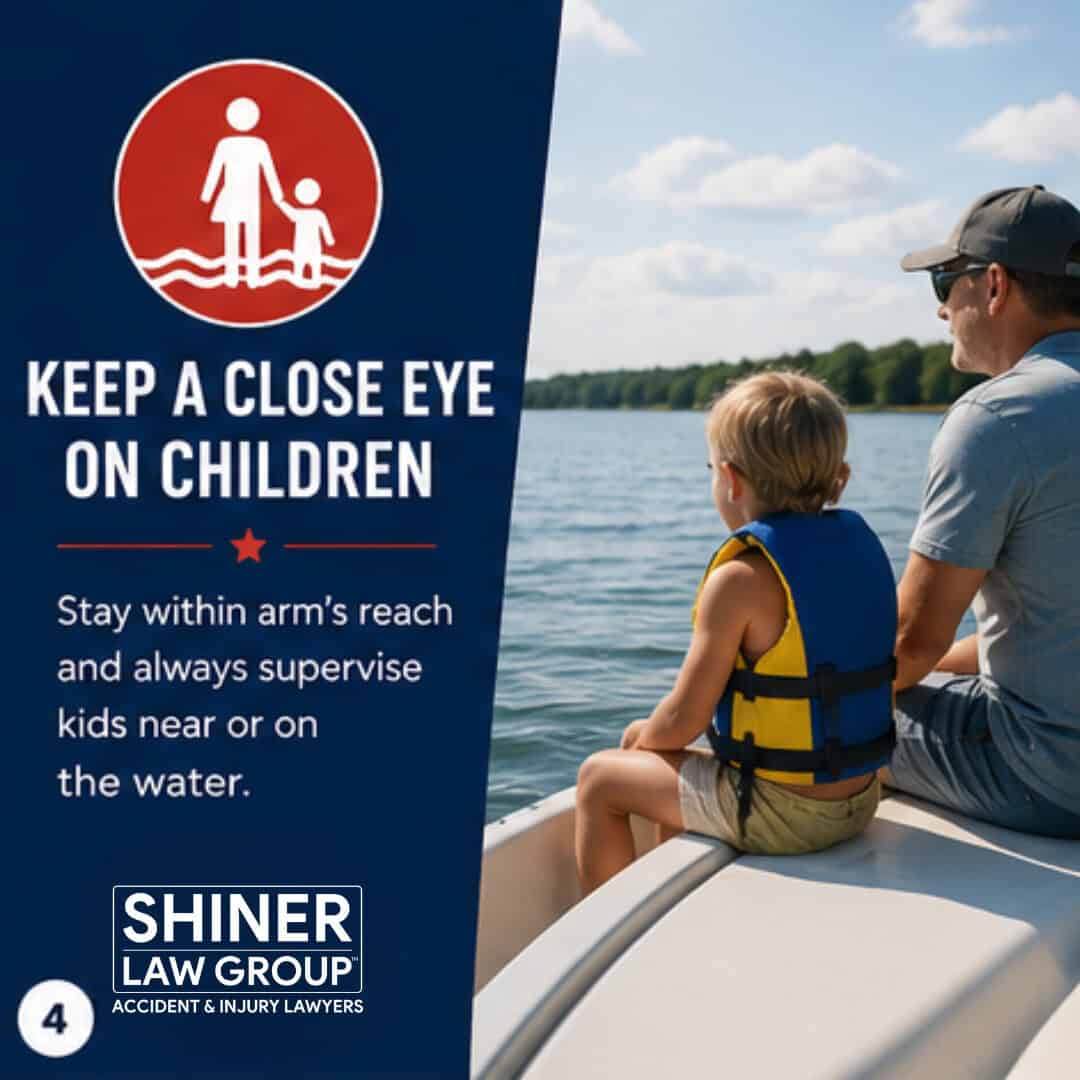
3. Keep a Close Eye on Children Near the Water
Drowning is one of the leading causes of accidental death for children in the United States — and it is almost always silent and fast. Unlike what we see in movies, a child who is drowning typically cannot call for help or wave their arms. They go quietly. That is why continuous, active supervision is so critical whenever children are on or near the water.
On a crowded holiday weekend, it is easy for attention to drift. Adults are socializing, watching the scenery, managing the boat, having a conversation. A child can slip overboard or fall from a dock in the time it takes to answer a text message. Drowning is among the leading causes of wrongful death in Florida. The rule I follow and recommend: designate one adult per child near the water, with no other distractions during their watch period. Rotate the responsibility so no single person becomes fatigued or inattentive.
This supervision applies not just while the boat is moving — but at the dock, at anchor, during swimming stops, and anytime children are near the water’s edge. The moment you let your guard down is the moment accidents happen.
4. Avoid Distractions While Operating a Boat
Distracted boating is a growing and underreported cause of accidents on Florida waterways. The temptation to check a phone, change a playlist, hand something to a passenger, or turn around to talk is constant — and on the water, even a few seconds of inattention can result in a collision with another vessel, a swimmer, a dock, or an obstacle in the water.
On holiday weekends, waterway traffic is significantly higher than normal. There are more boats around you, moving in more directions, at varying speeds. The margin for error is smaller. The time available to react to a sudden hazard is shorter. This is not the weekend to let your attention drift.
Practical steps: Put the phone away before departure and appoint a co-pilot to manage music and communications. If you need to check your phone for weather or navigation, come to a complete stop in a safe area, anchor if possible, and then look. Never look at a screen while underway in traffic. And if you’re tired, rotate the helm. Fatigue is a form of impairment.
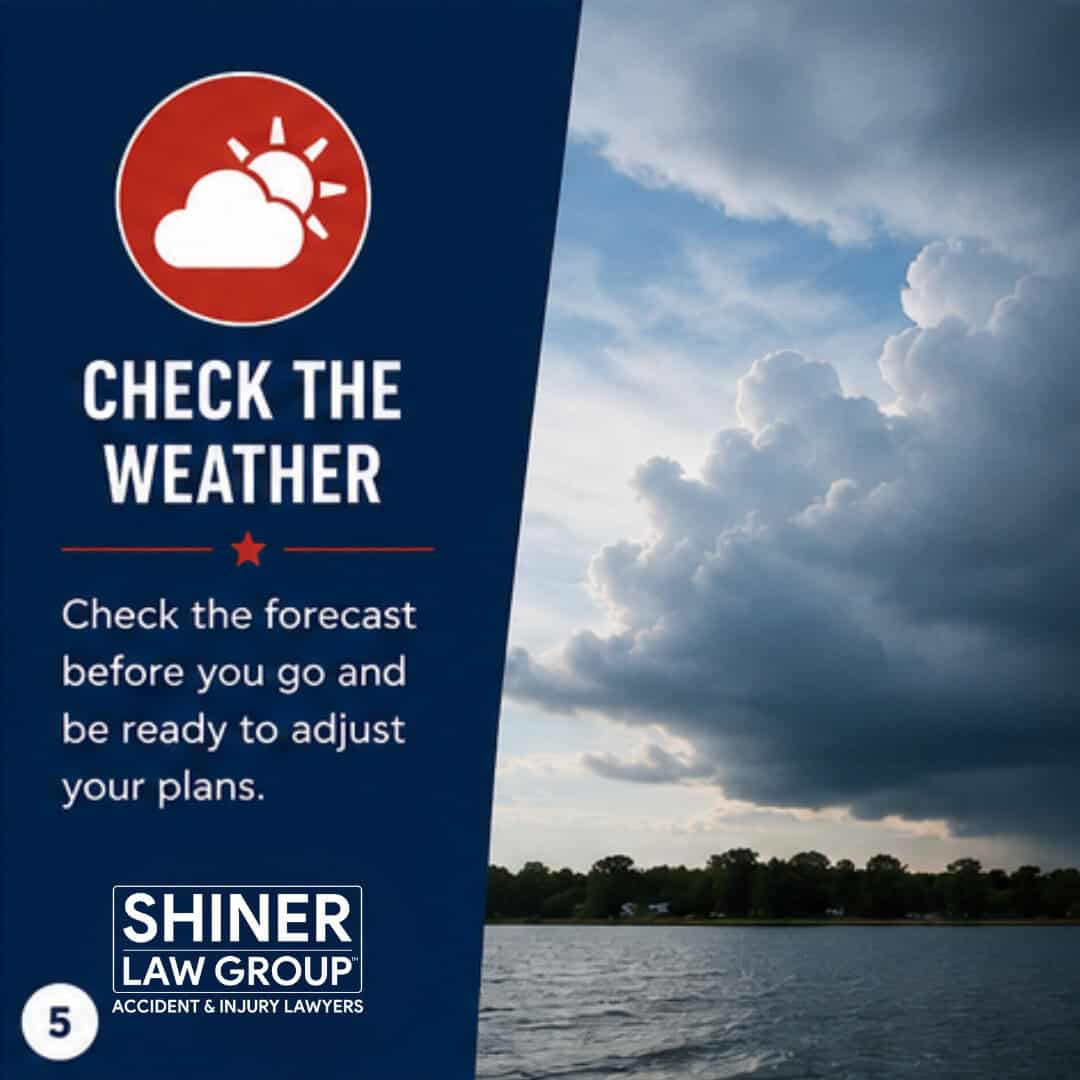
5. Check the Weather Before You Leave the Dock
Anyone who has spent time on Florida’s waterways knows that conditions can change with startling speed — especially in late May and throughout the summer months. A calm, sunny morning can become a dangerous thunderstorm within an hour or less. Lightning is an immediate life-threatening hazard on open water, where there is no shelter and you are often the highest point within a large radius.
Before every departure, check a marine weather forecast specifically for your area — not just a general weather app. The National Weather Service provides marine forecasts at weather.gov that include wind speed, wave heights, and lightning risk for specific bodies of water. Resources like the NOAA marine radio (VHF channels 1, 2, 3, or 4) provide real-time updates while you’re on the water.
The rule of thumb I follow: if you can see a dark cloud building on the horizon, head in now. Don’t try to outrun a storm. Do not wait to see if it passes. Bring the boat in, secure it, and wait for conditions to clear. No destination on the water is worth the risk of being caught in a lightning storm on an open vessel.
6. Make Sure Your Boat Has Proper Safety Equipment
Florida law requires specific safety equipment on every vessel — and the beginning of boating season is the perfect time to check that yours is onboard, functional, and up to date. A fire extinguisher with an expired gauge is useless. Flares that are past their expiration date may not ignite when you need them. A horn that’s been sitting in a compartment since last summer may be corroded and nonfunctional.
Required Florida safety equipment includes: a Coast Guard-approved life jacket for every person on board; a fire extinguisher (required on motorized vessels); visual distress signals including Coast Guard-approved flares or electric lights for nighttime operation; a sound-producing device (horn or whistle); and working navigation lights for operation between sunset and sunrise.
Beyond the legal minimum, I also recommend carrying: a first aid kit, a fully charged VHF marine radio, an anchor, a paddle, and a fully charged phone in a waterproof case. The Florida Fish and Wildlife Conservation Commission offers free vessel safety checks through their volunteer program — a great way to have a trained inspector confirm your equipment is complete and compliant before the holiday weekend.
You came to the water to make memories with the people you love. The goal is to make it home safely — so you can do it again. A few minutes of preparation before departure can be the difference between a perfect holiday weekend and a tragedy that changes everything. Please take those few minutes.
What to Do If You or Someone You Know Is Injured in a Boating Accident
Even when every precaution is taken, accidents can still happen — caused by the negligence of other boaters who weren’t as careful. If you are involved in a boating accident in Florida, the steps you take in the immediate aftermath matter significantly for both your health and your legal rights.
Seek Medical Attention Immediately
Even if you feel fine, seek medical care as soon as possible. Head injuries, internal injuries, and spinal injuries from boating accidents can have delayed symptoms. A same-day medical record is foundational evidence if you need to pursue a legal claim.
Report the Accident to FWC
Florida law requires boating accidents involving injury, death, or property damage over $2,000 to be reported to the Florida Fish and Wildlife Conservation Commission (FWC) within 10 days. Accidents involving death or disappearance must be reported immediately.
Document Everything
Photograph all vessel damage, your injuries, the surrounding area, and any identifying information from the other vessel(s) involved. Get names and contact information from all witnesses. Write down everything you remember about how the accident occurred while it is fresh.
Do Not Give a Recorded Statement to Any Insurer
Insurance adjusters will often contact accident victims quickly. Do not give a recorded statement and do not sign anything before speaking with an attorney. Statements made in the immediate aftermath of an accident are frequently used to minimize valid claims.
Contact a Florida Boating Accident Attorney
Boating accident claims in Florida involve FWC regulations, vessel insurance coverage, liability analysis, and in some cases BUI negligence that significantly affects the value of your claim. An experienced Florida personal injury attorney can advise you on your options and protect your rights from day one.
Frequently Asked Questions About Boating Safety in Florida
These are the questions I hear most often from clients and from people in our community about boating safety and Florida boating law.
Make Memories. Not Mistakes.
This Memorial Day weekend, as we take time to honor the brave men and women who made the ultimate sacrifice for our country, I hope you and your family get to enjoy everything Florida’s waterways have to offer. The sunsets, the laughter, the moments that remind us what life is really about.
Take a few minutes before you leave the dock. Check your equipment. Put on the life jackets. Designate a sober operator. Check the forecast. Keep a close eye on the kids.
From my family to yours — have a safe, beautiful, and meaningful Memorial Day weekend. 🇺🇸
— David Shiner, Founding Attorney, Shiner Law Group
This article is intended for general informational and safety awareness purposes only and does not constitute legal advice. Florida boating laws and regulations are subject to change. Consult the Florida Fish and Wildlife Conservation Commission (FWC) and the U.S. Coast Guard for current legal requirements. If you have been injured in a boating accident, please consult with a qualified Florida personal injury attorney for advice specific to your situation. Past results mentioned on this website do not guarantee future outcomes.