
What to Do After a Truck Accident in Florida: A Step-by-Step Guide
Key Takeaways
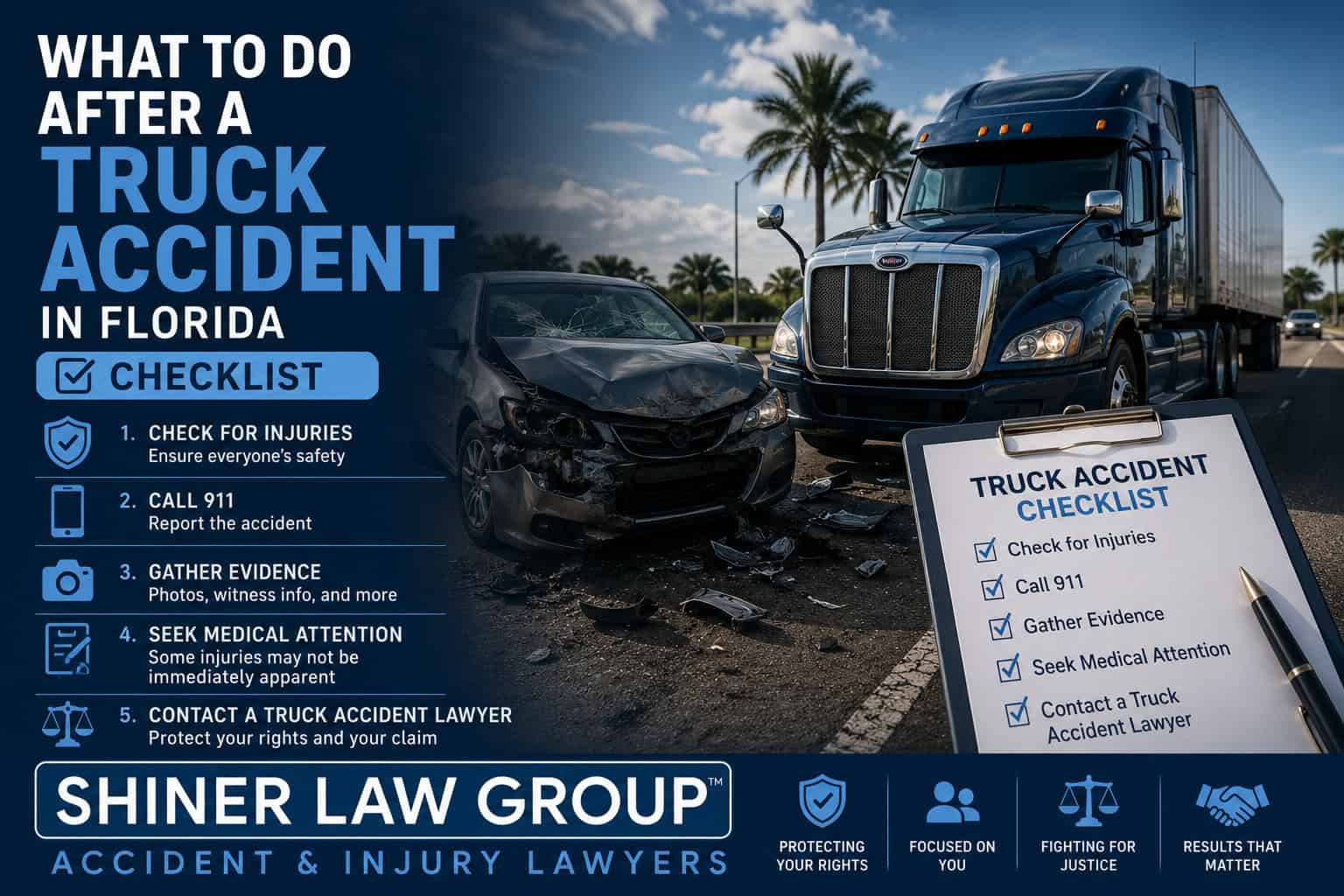
- Call 911, get medical care, and document the scene - including the truck's USDOT number.
- Do not give the trucking company's insurer a recorded statement or accept a fast settlement.
- The truck's ELD and "black box" data can prove fault but may be erased - preservation must happen fast.
- Florida generally gives you two years to file, but you should act far sooner.
What you do in the hours and days after a truck accident can shape your entire claim. Trucking companies often begin investigating immediately, and key evidence can disappear quickly. Follow these steps to protect your health and your rights.
Step-by-Step: After a Florida Truck Accident
- Call 911 and report the crash. Get police and paramedics to the scene. A police report and official crash documentation start the record you will rely on later.
- Get medical care right away. Truck-crash injuries - head, neck, spine, internal - are often worse than they first feel. Prompt treatment protects both your health and your claim.
- Document everything you safely can. Photograph the vehicles, the truck's markings and USDOT number, the scene, road conditions, and your injuries. Get the names and contact details of every witness.
- Get the trucking company and driver information. Record the driver's name, the carrier's name, the USDOT and MC numbers, and insurance details from the truck door and paperwork.
- Do not give a recorded statement. The carrier's insurer may call quickly and sound friendly. Politely decline to give a recorded statement or accept a quick settlement before speaking with a lawyer.
- Act fast to preserve the truck's data. The ELD and engine "black box" hold speed, braking, and hours-of-service data that can prove fault - but it can be overwritten. A lawyer can send a spoliation (evidence-preservation) letter immediately.
- Contact a Florida truck accident lawyer. An attorney can preserve evidence, identify every liable party, deal with the insurers, and protect your claim before the two-year deadline.
Why the Truck's "Black Box" Is So Important
Commercial trucks record data most drivers never think about: an electronic logging device (ELD) tracks the driver's hours, and the engine control module (the "black box") can capture speed, braking, and throttle in the moments before a crash. This data is powerful proof of fault - but the trucking company controls it, and it can be overwritten on a normal maintenance cycle. That is why getting a lawyer involved quickly, so a preservation letter goes out before data is lost, can make or break a case.
Don't Talk to the Insurer First
The carrier's insurance adjuster may reach out within a day, sound sympathetic, and ask for a "quick statement" or offer a fast check. Their job is to limit what the company pays. You are not required to give a recorded statement to the other side's insurer, and doing so before you understand your injuries or rights can hurt your claim.
Mind the Deadline
Under Florida's 2023 tort reform, you generally have two years from the crash to file a lawsuit. Waiting risks both the deadline and the loss of time-sensitive evidence, so it is wise to act as soon as you are able.
Just Been in a Truck Accident?
Time matters - evidence disappears fast. Get a free case review now and we will move immediately to preserve what proves your case.
The Florida Truck Accident Resource Guide
Truck cases are decided by evidence the trucking company controls and can lawfully overwrite. Enter your email and we will send the guide straight to your inbox, plus occasional updates when Florida or federal trucking rules change.
PDF Download - Truck Accidents
We respect your privacy and you can unsubscribe at any time. The guide is general information, not legal advice, and requesting it does not create an attorney-client relationship.
Related Reading
Frequently Asked Questions
What should I do first after a truck accident?
Should I talk to the trucking company's insurance?
What is a spoliation letter?
How long do I have to file a truck accident lawsuit in Florida?
This article is provided by Shiner Law Group for general informational purposes only and is not legal advice; reading it does not create an attorney-client relationship. Florida and federal trucking law is fact-specific and changes over time - consult a licensed Florida attorney about your situation. Attorneys at Shiner Law Group are Members of The Florida Bar. This is attorney advertising.